Invoice capture
Purchasing data was brought into the operating workflow from invoices instead of depending on repeated manual entry.
Restaurant Inventory Case Study
Inventory counts, invoice entry, vendor-price changes and ordering were separate tasks. That made it difficult to see what product was being used, what it currently cost and how much should be ordered next.
Purchasing data was brought into the operating workflow from invoices instead of depending on repeated manual entry.
Vendor prices were tracked across four suppliers so changes and cheaper alternatives could be seen over time.
On-hand inventory, received product and usage were connected so unusual consumption could be investigated instead of disappearing into the monthly P&L.
Recent usage and on-hand counts were turned into order guidance, replacing memory and guesswork with a repeatable process.
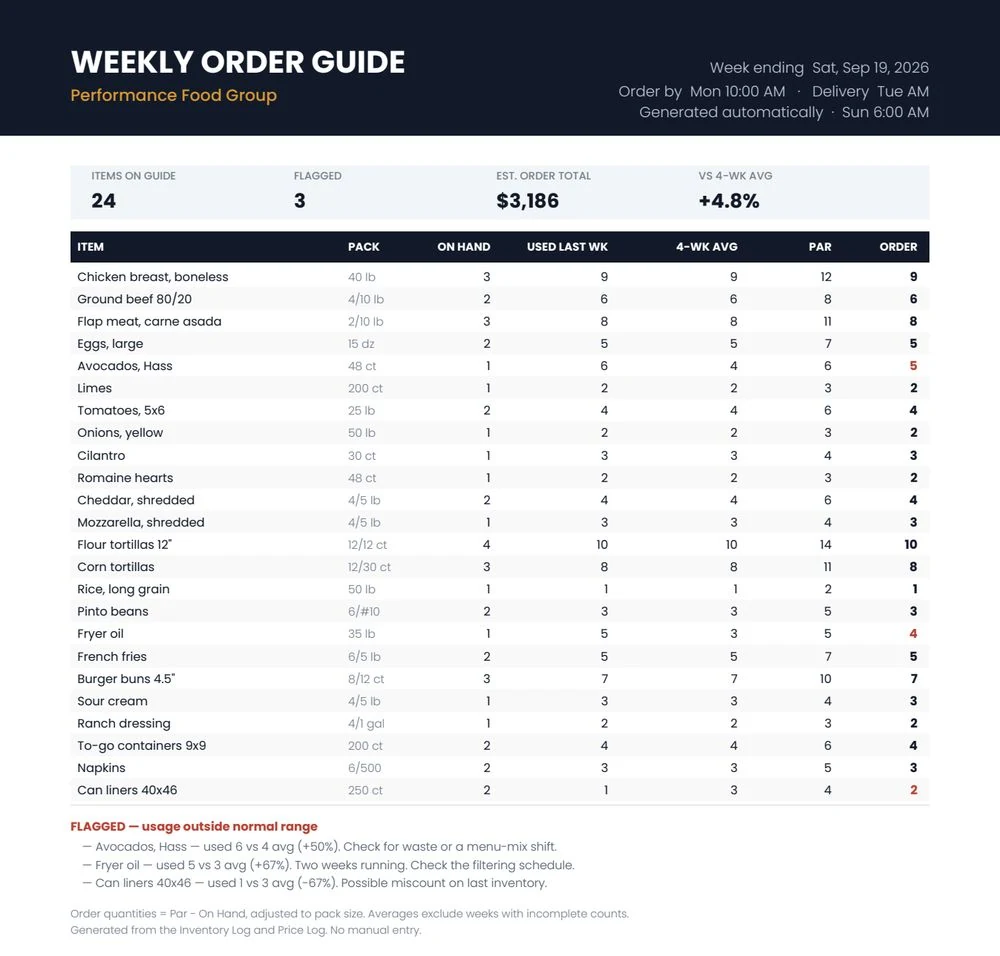
The inventory system documented $22,000 in waste reduction.
The important part was not simply counting inventory more often. It was connecting purchasing, usage and ordering closely enough for an abnormal pattern to become visible and actionable.
High-cost or high-usage items deserve tighter visibility than low-impact supplies.
Weekly usage is more useful when it sits beside a rolling baseline instead of being viewed in isolation.
A system works better when the same data used to catch waste also helps determine what to buy next.